

By Emma Johnson
What’s Driving Global Risk Right Now
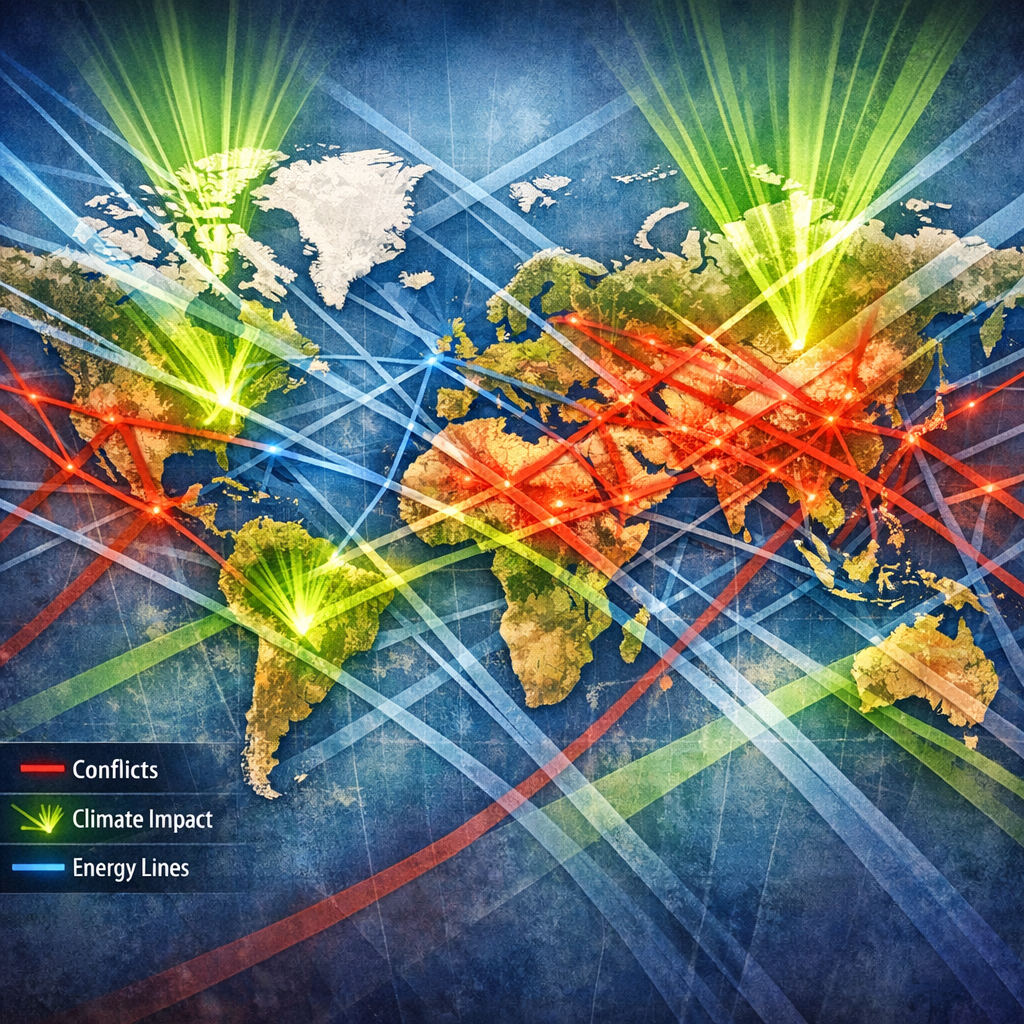
The world is navigating a web of overlapping challenges right now—conflicts in several regions, climate emergencies, energy disruptions, and economic stresses. These forces are influencing trade, migration, and everyday life far beyond where they begin.
Conflict and Geopolitics
Tensions along the Middle East, particularly involving the US, Iran, and their neighbors, continue to create ripple effects across global energy markets and supply chains. The crisis has led to higher fuel prices and concerns over disruptions in maritime routes. Around the world, extended conflict zones demand growing humanitarian responses and testing diplomacy amid rising civilian suffering.
Climate Strains and Environmental Risks
From worsening wildfires in Europe and the Americas to prolonged droughts, climate change is no longer a backdrop but a force reshaping communities, ecosystems, and economies. Weather extremes not only threaten lives and infrastructure but also expose weak points in food, water, and energy systems—amplified when combined with ongoing resource scarcity and disruptions.
Energy, Economy & Food Security
Supply disruptions—especially of oil, gas, and fertilizer—have made basic costs volatile. Inflation, already elevated, is being squeezed by these disruptions. In many places, economies are growing more slowly than expected. People are feeling the impact through rising prices of everyday goods and uncertain job prospects.
The Local Angle: Why It Matters for Us in Charleston & Beyond
Even in Charleston, these global shifts show up in familiar ways:
- Higher costs at the pump and grocery store—both driven by fewer global supplies and demand shocks.
- Climate-related disasters elsewhere can worsen migration pressures or prompt policy shifts that affect trade or federal aid.
- Supply chain issues might delay imported goods or shift production closer to home, sometimes raising prices or affecting product availability.
- Volatility in global markets can influence investment, interest rates, and employment in sectors tied to energy, manufacturing, or agriculture.
What We Can Do & What To Watch Next
Staying informed matters. Here are a few frontiers to keep tabs on:
- Policy moves around energy diversification and clean alternatives—what governments are doing to shift supply sources.
- Diplomatic efforts to resolve or reduce conflicts—in the Middle East and elsewhere—that could ease stress on global trade and energy flows.
- Early warning systems and infrastructure investments to cope with climate shocks.
- Supply chain resilience pushed by businesses and governments—diversifying sourcing, stockpiling essentials, or investing locally.
Global crises can be overwhelming, but understanding their connections helps us respond better—and locally, it reveals where opportunities and risks intersect in our lives. Charleston is part of this world, and staying aware is part of staying prepared.