

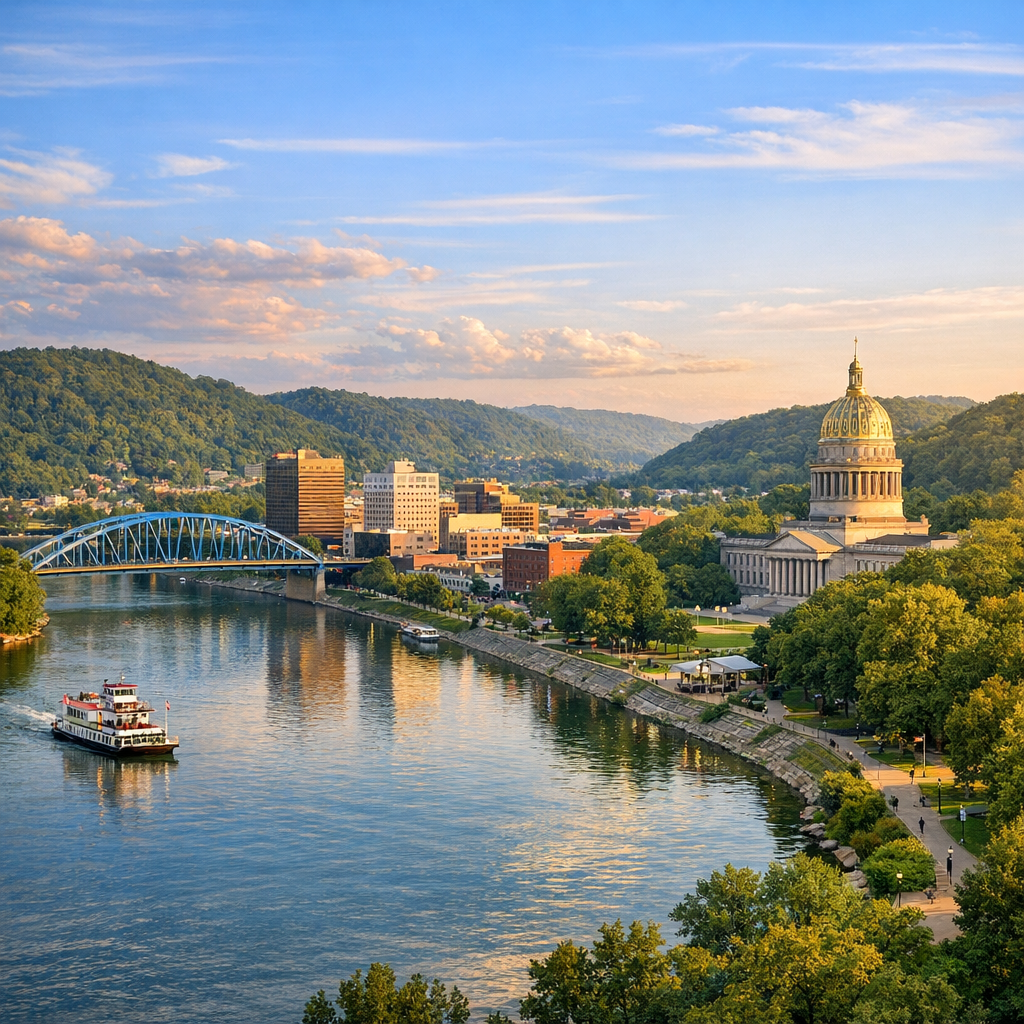
Charleston, West Virginia, experiences a diverse climate characterized by warm, humid summers and short, cold winters. Understanding these patterns is essential for residents and visitors alike.
Seasonal Climate Overview
Throughout the year, Charleston’s temperatures typically range from 27°F to 85°F. The warm season spans from late May to mid-September, with July being the hottest month, averaging highs of 85°F and lows of 66°F. Conversely, the cold season lasts from early December to late February, with January being the coldest month, averaging highs of 43°F and lows of 24°F. Precipitation is fairly evenly distributed year-round, with May and July being the wettest months, averaging around 4.76 inches and 5.63 inches of rainfall, respectively. Snowfall is common in winter months, contributing to the region’s seasonal charm.
Environmental Initiatives in Charleston
Charleston is committed to preserving its natural beauty and promoting sustainability through various environmental programs:
Charleston’s Green Team
Established in 2021, the Green Team is a volunteer advisory body that provides recommendations to the city’s administration on energy efficiency, land use, greenspaces, water resources, transportation, waste management, and recycling. Their mission is to foster a connected, vibrant, and sustainable Charleston, positioning the city as a leader in climate resilience within West Virginia.
River Proud Program
The River Proud Program, initiated by Charleston’s Stormwater Department, recognizes residents and businesses that implement practices to reduce stormwater runoff and pollution. Actions such as installing green infrastructure, planting indigenous vegetation, harvesting rainwater, and participating in trash cleanups contribute to this initiative.
Rehabilitation Environmental Action Plan (REAP)
Since 2005, REAP has been dedicated to cleaning up West Virginia and eliminating litter. This program coordinates efforts among volunteers, businesses, community organizations, and local governments to make the state shine.
By understanding Charleston’s climate and supporting these environmental initiatives, residents can actively contribute to the city’s sustainability and resilience.