

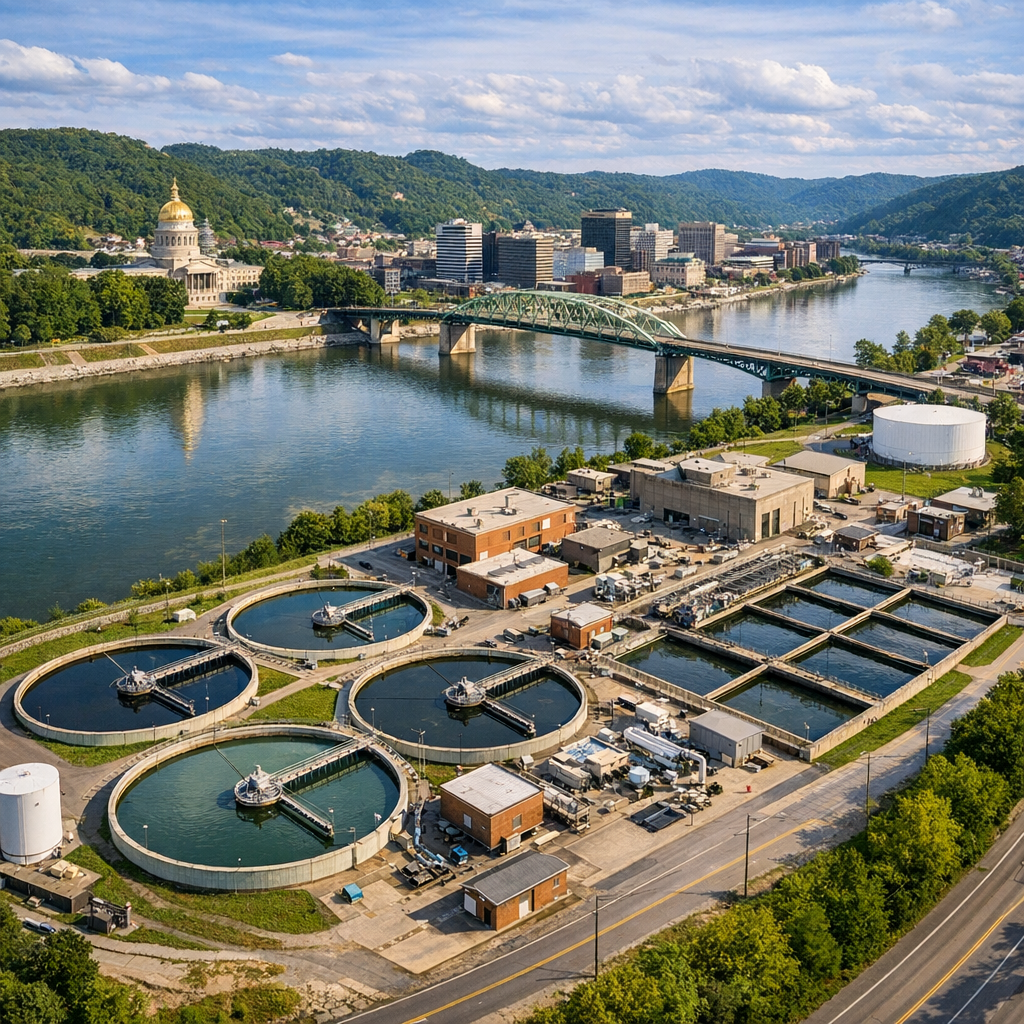
Charleston, West Virginia, situated at the confluence of the Kanawha and Elk Rivers, has a rich industrial history. However, this legacy has left the city grappling with water management challenges, including aging infrastructure and contamination risks.
Historical Context
In 2014, the Elk River chemical spill released approximately 10,000 gallons of crude MCHM into the river, contaminating the city’s primary drinking water source. This incident highlighted vulnerabilities in Charleston’s water management systems and underscored the need for comprehensive strategies to prevent future occurrences.
Current Challenges
Charleston’s water infrastructure is aging, and the city has experienced a declining population, leading to reduced revenue for maintenance and upgrades. The region’s economic challenges further complicate efforts to invest in necessary improvements. Additionally, the management of drinking water and wastewater involves multiple public and private entities, resulting in fragmented oversight and coordination.
Integrated Water Resource Management (IWRM)
To address these issues, experts advocate for Integrated Water Resource Management (IWRM), a process promoting coordinated development and management of water, land, and related resources. Implementing IWRM in Charleston could enhance economic and social welfare without compromising vital ecosystems. This approach would involve collaboration among various stakeholders to develop a unified strategy for water resource management.
Community Involvement
Community engagement is crucial in developing and implementing effective water management strategies. Residents can participate in public forums, provide feedback on proposed initiatives, and support policies aimed at improving water infrastructure. By working together, Charleston can build a more resilient and sustainable water management system for the future.