

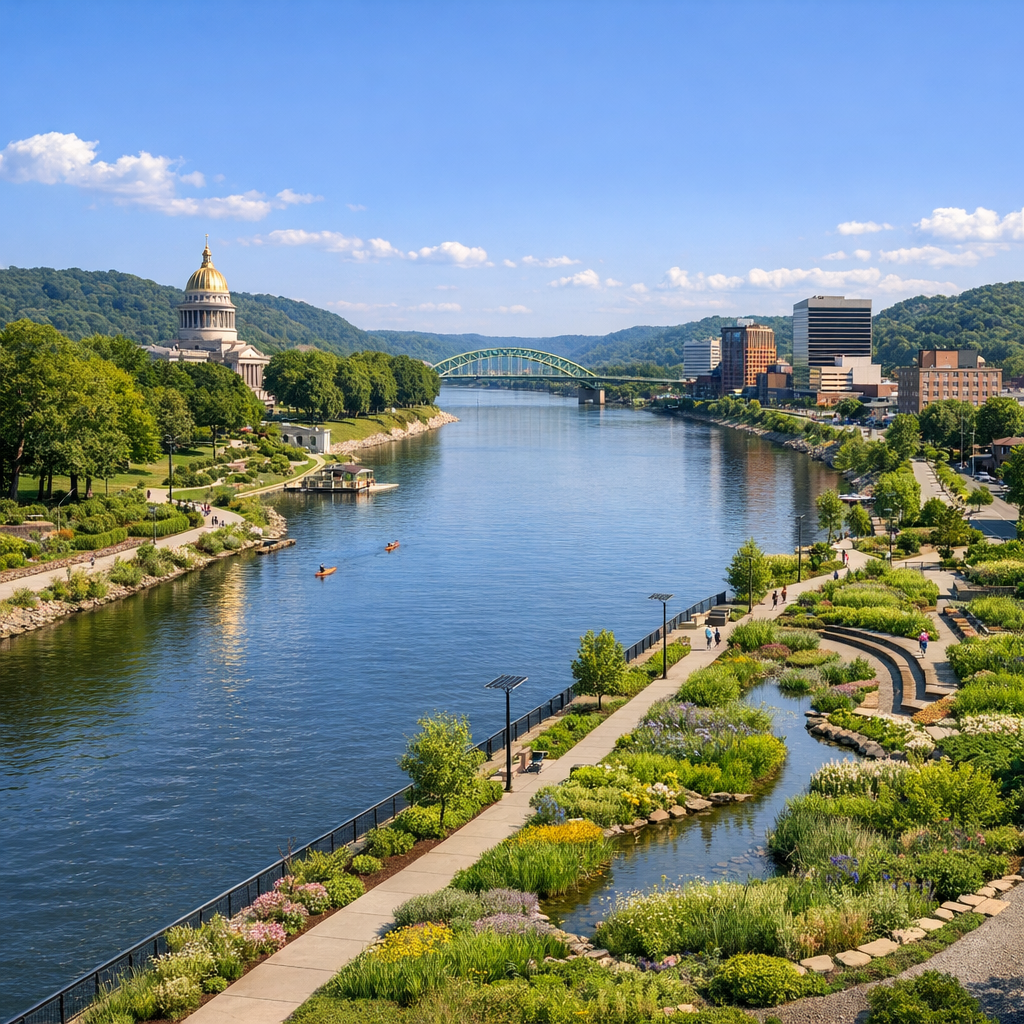
Charleston, West Virginia, experiences a humid subtropical climate characterized by warm, humid summers and short, cold winters. Average temperatures range from lows of 27°F in winter to highs of 85°F in summer. Precipitation is fairly evenly distributed throughout the year, with an annual average of approximately 44.48 inches.
Climate Trends and Projections
Over the past century, Charleston has observed a temperature increase of about 0.5°F to 1°F. Projections indicate that by 2100, temperatures could rise by 3°F to 4°F in winter, spring, and summer, and by 4°F to 5°F in fall. These changes may lead to more frequent heavy rainstorms and increased flooding risks.
Local Environmental Initiatives
To address these challenges, Charleston has implemented several environmental programs:
Charleston’s Green Team
Established in 2021, the Green Team is a volunteer advisory body that provides recommendations to the Mayor and City Council on sustainability topics, including energy efficiency, land use, and waste management. Their mission is to promote a connected, vibrant, and sustainable Charleston.
Rehabilitation Environmental Action Plan (REAP)
Since 2005, REAP has been dedicated to cleaning up West Virginia by combating litter and illegal dumping. The program coordinates state cleanup efforts and empowers citizens to take ownership of their communities through technical and financial assistance.
WV Make It Shine Program
This comprehensive program aims to make West Virginia the cleanest state in the nation. It coordinates efforts among volunteers, businesses, and local governments to eliminate litter and promote environmental stewardship.
River Proud Program
Charleston’s Stormwater Department recognizes citizens who take action to reduce stormwater runoff and pollution through the River Proud Program. Initiatives include green infrastructure, indigenous planting, and rainwater harvesting to protect the Elk and Kanawha Rivers.
By understanding our local climate patterns and actively participating in these initiatives, Charleston residents can contribute to a more sustainable and resilient community.